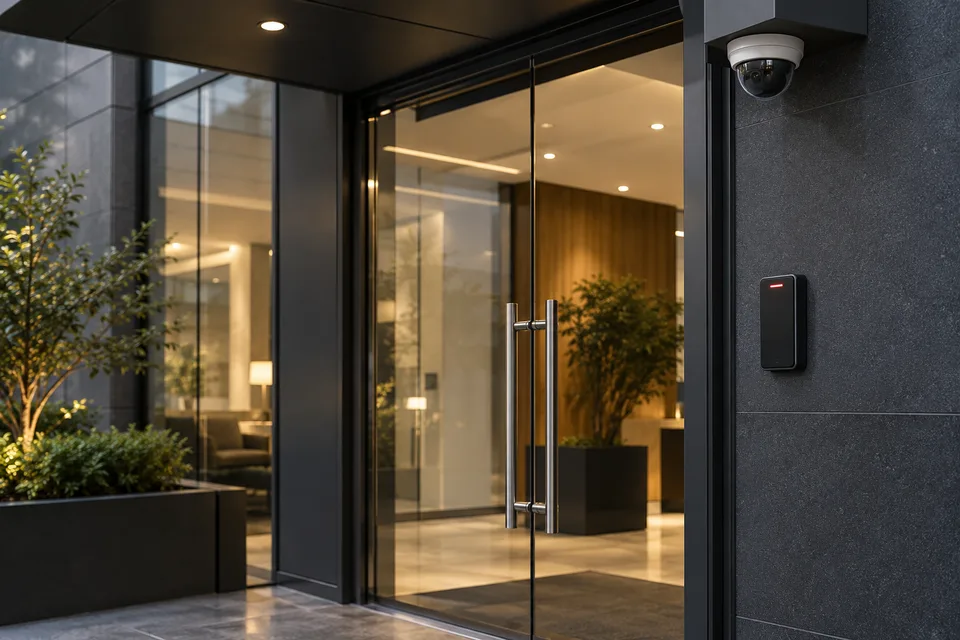
A solution shaped around your work.
A standalone smart lock and a centrally managed access system serve different needs. Door thickness, handle arrangement, power maintenance and emergency entry procedures help determine which approach fits the proposed installation.
What this service covers
- Door dimensions and existing lock mechanism inspection
- Authorised fingerprint enrolment and access removal
- Power checks and supported entry alternatives
- Lock operation and administrator handover testing
We confirm the selected equipment, responsibilities and deliverables in your project proposal before work begins.
How we deliver the work
- 01
Map people and permissions
Define employee groups, attendance rules, access zones and administrator responsibilities. Identify the enrollment method and the records that each role needs to view.
- 02
Configure the workflow
Configure the selected devices or application around approved schedules and permissions. Check connectivity and any interfaces with HR, payroll or existing door equipment.
- 03
Test real scenarios
Test agreed employee and administrator scenarios, including exceptions and access removal. Hand over the operating steps and clarify who maintains users and reports.
A clear handover
Agree the records your team needs to operate and maintain the solution. Depending on the selected scope, these can include:
- Device or application configuration summary
- User administration and exception-handling steps
- Agreed reporting and integration checks
What to prepare for your project
Provide door photographs, dimensions, existing lock details and intended users. Explain who manages credentials and how authorised entry should work if the primary method becomes unavailable.
Discuss this serviceYour questions, answered
Can a fingerprint lock be fitted to any office door?
No. Door material, dimensions, frame condition and the existing lock mechanism affect suitability. A physical assessment is needed to confirm fitting requirements and compatibility with the building’s approved exit arrangements.
What information helps you select a smart door lock?
Provide the door material, thickness, existing lock type and intended users. Photos without personal information can help assess the fit; the final model and installation scope follow a compatibility check.
How will we handle a flat battery or a lost access credential?
Ask about the selected model’s low-battery alerts, authorised backup entry and credential removal procedure. These features vary by model and should be explained and demonstrated during handover.
What information should be shared at the enquiry stage?
Share approximate employee and door counts, shift patterns and existing device models. Use sample field names or anonymized examples to discuss integrations; actual biometric templates, employee files and passwords are not needed in the website form.